How High Should a Shower Head Be?
Mount a fixed shower head about 80 inches above the shower floor as a common starting point, then adjust for the tallest person using it and the shower head's reach. A slide bar makes it easier to set different heights for different users.
On this page (7 sections)
- How high should a shower head be from the floor?
- How do you choose a height for different people?
- Does a rain shower head need to sit higher?
- Where should you place the shower head for seated use?
- How do you measure before moving a shower outlet?
- Can you change shower head height without moving plumbing?
- What should you check before settling on a height?
Mount a fixed shower head about 80 inches above the shower floor as a common starting point, then adjust for the tallest person using it and the shower head's reach. A slide bar helps a household set the spray at different heights without moving the wall supply.
Measure from the finished shower floor, not the subfloor or the top of a curb. The right position also depends on whether you have a fixed head, handheld, rain head, or a combination.
How high should a shower head be from the floor?
About 80 inches from the finished shower floor is a common starting point for a fixed shower head. Treat it as a guide, not a required height for every bathroom.
The spray should clear the tallest regular user without forcing them to duck. Check the spray angle too: a high head can still send water toward the wall or over the shower door if the arm points the wrong way.
Before setting a new outlet, stand in the shower and mark a comfortable target on the wall. Include the head and arm in your measurement, since the spray face may sit higher or lower than the pipe opening.
For a broader look at styles and mounting choices, see our guide to how to choose a shower head.
How do you choose a height for different people?
Set a fixed head for the tallest person who uses the shower most often, then check that shorter users can still get a comfortable spray. If one position cannot work for everyone, an adjustable handheld or slide bar adds flexibility.
A handheld can be raised for a standing adult and lowered for a child, seated user, or pet rinse. Consider the slider's adjustment range and hose reach, not just the height of its top bracket.
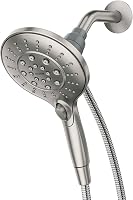
The Moen has a 30-inch slide bar and a 69-inch hose, with a handheld head that adjusts along the bar.
A slide bar changes where the handheld rests, but it doesn't change the fixed wall supply or make every user fit the same spray angle. See our handheld shower heads on a slide bar guide for more options.
Does a rain shower head need to sit higher?
A rain head should clear the tallest user while keeping the spray close enough to feel direct. Its size and arm position affect the useful height, so check the full reach before installing the outlet.
A ceiling-mounted head can sit over the user's standing position, while a wall-mounted rain head may need an angled arm to bring the spray inward. Leave room for the head to clear the ceiling, and check whether the spray will stay within the shower area.
The Veken set pairs a 10-inch square rain head with a 15-inch extension arm and a 13-inch slide bar for its handheld.
If you're weighing a rain head against other layouts, our guide to whether a rain shower head is worth it covers the tradeoffs. For a system with more than one spray point, see shower systems with body jets.
Where should you place the shower head for seated use?
For seated bathing, make sure the handheld can reach the seated user's body without pulling the hose tight. A slide bar can put the holder within reach, while a fixed overhead head may not direct water where it's needed.
Check the seat location, hose path, and controls before choosing the bar height. Keep the hose clear of the seat and grab bar, and make sure the controls can be reached without leaning into the spray.
The BRIGHT SHOWERS set combines an adjustable handheld holder with a stainless steel grab bar. Its maker says the bar supports up to 250 lb and meets ADA requirements.
A grab bar's presence doesn't make a shower safe by itself. If you need help planning a more accessible layout, our guide to shower systems for seniors covers features to consider.
How do you measure before moving a shower outlet?
Measure from the finished floor to the shower head's spray face, then check the arm's angle and reach. Mark the intended outlet height and verify that the head clears both the tallest user and the enclosure.
Use painter's tape to mark the floor-to-head measurement on the wall. Have the tallest user stand beneath the mark, then check whether the spray would hit the head or shoulders at an uncomfortable angle.
If you're replacing a head without moving the outlet, compare the arm length and direction with the current setup. A new head may sit differently even when it attaches to the same wall connection.
For a new system, plan outlet height alongside the valve and trim. Our guide to how to install a shower system explains the planning steps before installation.
Can you change shower head height without moving plumbing?
A slide bar can adjust a handheld's position without moving the wall supply. A fixed shower head usually needs a different arm or a relocated outlet to change its height.
If you only need more flexibility, a handheld can be a simpler option than opening the wall. The BRIGHT SHOWERS set has a 69-inch hose and an adjustable holder, while the Moen set offers a 30-inch slide bar.
For a fixed head, check whether a different arm can bring the spray to a more useful position. If the pipe outlet itself needs to move, a plumber can assess the wall and existing connections.
What should you check before settling on a height?
Check the tallest user's clearance, spray direction, enclosure edges, and handheld reach before fixing the final position. A comfortable height should keep water inside the shower and let each user stand naturally.
Measure from the finished floor and account for the shower head's shape and any extension arm. If more than one person uses the shower, try the proposed position with each person before finishing the wall.
For a standard fixed head, start near 80 inches and adjust to fit the room and household. Choose a slide bar if users need different handheld heights, and plan a rain head around both its arm reach and the tallest user's clearance.
For help with weak spray after installation, see how to fix low water pressure in your shower.
Frequently asked questions
How high should a shower head be from the floor?
About 80 inches above the shower floor is a common starting point for a fixed shower head, but the right height depends on the tallest user and the spray angle. Measure from the finished shower floor, not the subfloor, and check that the spray clears the user's head comfortably.
Should a shower head be above your head?
Yes, a fixed shower head should sit high enough for the tallest regular user to stand beneath it without crouching. The spray should reach the body rather than hit the top of the head at an awkward angle; an adjustable handheld on a slide bar can cover more than one user's height.
How high should a rain shower head be?
Place a rain head high enough to clear the tallest user, while keeping it low enough that the spray feels direct and warm. The arm length and head size affect the usable position, so check the planned shower head's reach before setting the pipe outlet.
Can you adjust shower head height without moving plumbing?
A handheld shower head on a slide bar can move up or down without relocating the wall supply. A fixed head generally needs a different shower arm or plumbing position to change its height, so check the connection and wall layout before making changes.