How to Remove a Shower Head, Even a Stuck One
To remove a shower head, turn it counterclockwise by hand while holding the shower arm steady. If it's stuck, protect the finish with a cloth and use an adjustable wrench with gentle pressure.
On this page (7 sections)
- How do you remove a shower head step by step?
- What should you prepare before loosening the head?
- How do you remove a stuck shower head without damaging the arm?
- What should you do after the shower head comes off?
- Which replacement head fits your shower setup?
- How do you reinstall a shower head after cleaning?
- When should you stop and call a plumber?
To remove a shower head, turn it counterclockwise by hand while holding the shower arm steady. If it's stuck, protect the finish with a cloth and use an adjustable wrench with gentle pressure.
Removing the head is often the first step before cleaning mineral buildup or replacing a worn fixture. Work slowly and stop if the shower arm turns with the head, since that can loosen a connection inside the wall.
How do you remove a shower head step by step?
Unscrew the head counterclockwise, then clean the exposed threads before reinstalling or replacing it. Keep the shower arm still so you don't twist the pipe behind the wall.
- Turn the shower off and let water drain from the head.
- Grip the shower arm near the wall with one hand.
- Turn the head counterclockwise by hand.
- If it won't budge, cover the connection with a cloth and use an adjustable wrench.
- Remove old tape and debris from the threads with a soft cloth or brush.
Don't use the shower head or arm as a lever. If you feel the arm shifting at the wall, stop and get help from a plumber.
What should you prepare before loosening the head?
Have a cloth, an adjustable wrench, and a soft brush ready before starting. The cloth protects the finish, while the wrench can help with a connection that won't loosen by hand.
Put a towel in the tub or shower to catch small parts and keep them from falling into the drain. Avoid gripping the shower arm with pliers, which can scratch or deform it.
You generally don't need to shut off the home's water for this task, but the shower should be off. If water keeps flowing after you turn it off, close the supply if you can and resolve that issue first.
How do you remove a stuck shower head without damaging the arm?
Use a cloth-covered wrench and gradual pressure, with your other hand bracing the shower arm near the wall. Don't yank, jerk, or force the connection if the arm starts to move.
First try turning the head by hand. If mineral deposits or old thread sealant have made the joint hard to turn, a wrench may give you more grip.
Keep the wrench on the metal connection where the head meets the arm, not on a plastic spray face or decorative trim. Stop if the finish begins to crush, the arm twists, or you see movement at the wall.
What if the shower arm turns with the head?
Stop turning if the shower arm moves at the wall. The pipe may be twisting behind the tile or wall surface, and more force can turn a simple removal into a plumbing repair.
Don't try to hold the arm with a second wrench unless you can do so without damaging the finish or wall. A plumber can check the connection and remove the head without putting extra strain on the concealed pipe.
Can you use pliers to remove a shower head?
An adjustable wrench is usually easier to control than pliers because it fits the connection more evenly. If you use a tool, place a thick cloth between it and the fixture to help prevent scratches.
Pliers can slip or squeeze a narrow fitting too hard. Avoid using them on plastic parts, decorative finishes, or a shower arm that already feels loose.
What should you do after the shower head comes off?
Clean the shower arm threads gently and check them for damage before putting a head back on. Remove loose tape and residue with a cloth or soft brush, not a sharp metal tool.
Look for flattened, cracked, or crossed threads. If the threads are damaged, don't force a replacement onto them; have the connection checked.
For cleaning clogged spray holes or mineral deposits, follow our guide to how to clean a shower head. It covers cleaning methods and how to handle buildup without scratching the finish.
Which replacement head fits your shower setup?
The right replacement depends on whether you want a simple head, a handheld option, or both. Check the arm connection and the available clearance before choosing a larger or taller assembly.
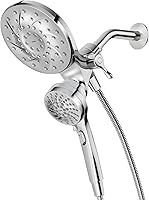
For a fixed head plus a detachable sprayer, the Moen 26009 Engage Magnetix combines a rain showerhead and handshower, with a magnetic dock and 60 in metal hose.
The Moen measures about 17 3/4 in tall when docked, so check the space above the shower arm. Compare more options in shower heads with a handheld.
If you want a larger rain head with an adjustable extension arm, the Veken 11.8 inch high pressure head with handheld includes a detachable handshower and an extension arm described as adjustable up to 16 in.
Measure the wall and shower space before selecting a larger head. Don't assume the arm will fit your current setup without checking the connection and clearance.
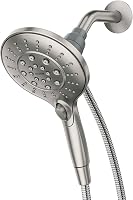
For a handheld head with spray choices and a cleaning-focused spray, the Delta ProClean shower head with handheld includes six spray settings and a 72 in hose.
The Delta's brushed nickel finish may suit a bathroom with matching fixtures. For more help comparing spray styles, see how to choose a shower head.
How do you reinstall a shower head after cleaning?
Wrap the shower arm threads with fresh plumber's tape if the head's instructions call for it, then start threading the head by hand. Turn it clockwise and make sure it catches cleanly before tightening.
Don't force the connection if it feels crooked or binds. A cross-threaded fitting can damage the threads, so back it off and try again.
Tighten only enough to make a secure connection, following the head's instructions. Turn on the shower and check for leaks at the joint; if water continues to seep, turn it off and inspect the connection.
For the full cleaning process, see how to clean a shower head and bring back the spray. If you're deciding whether to replace an older fixture, how long shower heads last can help you weigh age and condition.
When should you stop and call a plumber?
Stop if the shower arm moves inside the wall, the pipe or threads look damaged, or the connection won't loosen with gentle pressure. A plumber can inspect the hidden fitting before the wall or plumbing is damaged.
If the head comes off cleanly, remove debris from the threads and follow the replacement's instructions. Choose a simple head for a like-for-like swap, or compare handheld and combo shower heads if you want a detachable sprayer.
The main rule is to hold the arm steady, turn the head counterclockwise, and never force a moving wall connection. That keeps routine cleaning or replacement focused on the head rather than the plumbing behind it.
Frequently asked questions
Which way do you turn a shower head to remove it?
Turn the shower head counterclockwise as you face the connection. Hold the shower arm steady with your other hand so it doesn't twist inside the wall.
If the head won't move by hand, protect its finish with a cloth and use an adjustable wrench with light pressure.
How do you remove a shower head that is stuck?
Try turning it by hand first, then use an adjustable wrench over a cloth to protect the finish. Apply slow, steady pressure while bracing the shower arm.
Stop if the arm or wall fitting begins to move, since forcing it can damage the connection behind the wall.
Do I need to turn off the water to remove a shower head?
Usually, you can remove a shower head without shutting off the home's water because the shower valve controls the flow. Turn the shower off, let the head drain, and keep the handle accessible.
If water continues flowing, shut off the supply and address the valve before continuing.
How do you clean the threads after removing a shower head?
Remove old thread tape and loose debris gently with a cloth or a soft brush, taking care not to scratch the shower arm threads. Check the head's instructions before soaking or using a cleaner.
For a full cleaning routine, see our guide to cleaning a shower head.