How to Turn On a Delta Shower Head
To turn on a Delta shower head, turn the handle or lever toward the hot side until water flows, then set the temperature. If the head is a 2-in-1 model, use the diverter to send water to the shower head, the handheld, or both.
On this page (9 sections)
- How do you turn on a Delta shower head?
- How do you read a Delta handle and trim?
- How do you switch between the shower head and handheld?
- What controls do Delta 2-in-1 shower heads have?
- How do you turn on a Delta tub and shower set?
- Why won't the shower turn on, or why is the flow weak?
- How do you set the temperature and keep it steady?
- When should you replace the head instead of fixing it?
- What's the simple routine for turning on a Delta shower?
To turn on a Delta shower head, turn the handle or lever toward the hot side until water flows, then adjust for temperature. On a 2-in-1 model, the diverter decides whether the water leaves through the fixed shower head, the handheld, or both.
The steps below cover the handle trims you'll meet most often. The same order works whether you just moved in or the shower sat unused for a while.
How do you turn on a Delta shower head?
Rotate the main handle away from the off position and water starts within a moment. Most Delta trims put off at one end of the handle's travel and warm at the other.
Single-handle trims are the usual fit in tub and shower sets. Turn the lever or knob slowly and listen for water in the pipe before you look up at the head.
If the handle also pulls outward on your model, pull first and then rotate.
Two-handle trims work the other way: the hot and cold handles each control their own side. Open the cold side first, then bring in hot until the temperature feels right.
This gives you a steadier mix than opening both wide at once.
Once water is running, the head's spray ring or dial changes the pattern. That's separate from the handle and doesn't stop the flow.
How do you read a Delta handle and trim?
The handle's direction is the temperature control, and on most single-handle Delta trims the warm zone sits partway along the turn. Cold usually arrives first as you rotate, with hot at the far end.
Look at the trim plate behind the handle for a small index or a hot marker. It shows which way to turn for warm water, and it's easy to miss when a handle is stiff or the plate is plain.
Pressure-balanced cartridges, which Delta fits in many sets including the Foundations 13 Series and Modern 14 Series trims, keep the mix steady when a toilet flushes or a washing machine starts. That's why the handle position that felt right yesterday still feels close today.
If the handle turns but the water stays cold no matter how far you go, the problem is upstream. Check the water heater setting and any shutoff valve before blaming the shower.
How do you switch between the shower head and handheld?
Use the diverter to choose the outlet. A tub and shower set has a diverter on the tub spout or on the trim that flips water from the spout up to the shower head.
A combo head uses a lever or button on the head body.
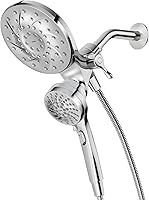
On a 2-in-1 design, the hand shower can run on its own, docked in the center of the head, or at the same time as the outer shower head. That's the whole point of the format: you choose the flow without reaching for the main handle.
If water comes out of the tub spout when you want the shower, the diverter is still in the tub position. Pull or turn it fully to the shower setting.
A diverter that won't stay put usually needs a new cartridge or seal, not a new shower head.
What controls do Delta 2-in-1 shower heads have?
The head face carries the spray settings, and the docking point carries the handheld. On the In2ition 2-in-1, the detachable hand shower sits in the middle of the shower head and can be lifted out to use separately on its hose.
The 6 spray options are ProClean, Full Body, Massaging, Shampoo Rinsing, Shampoo With Massage, and Pause. Turn the ring on the head face to move between them while the water runs.
Pause stops the flow at the head without touching the handle, which helps when you're lathering up.
The ProClean spray is built for cleaning tile and hard-to-reach spots with a focused fan. The Touch-Clean spray holes let you wipe away calcium and lime with a finger, so a head that turns on weakly from mineral buildup is easy to fix.
This is a straightforward way into the combo format if you want the handheld option without changing the valve behind the wall. Our comparison of Moen vs Delta shower heads covers how the two brands handle the same 2-in-1 idea.
How do you turn on a Delta tub and shower set?
Open the main handle, then move the diverter from the tub spout to the shower head. That's the sequence for the two-piece trim sets that replace the valve and handle at the wall.
The Delta Foundations 13 Series set pairs a 2-spray shower head with a tub spout and a single handle in brushed nickel. The Monitor pressure-balanced cartridge is included in the trim, so the temperature holds steady when other water in the house runs.
The rough-in valve is sold separately; Delta recommends the R10000-UNBXHF. Plan for that part before you start the job, because the trim won't go on the wall without it.
The finish is tested for corrosion resistance to at least twice industry standards, and the Touch-Clean holes wipe clean the same way as on the combo head.
The Delta Modern 14 Series set takes the same parts in a square, matte black look. It also needs a MultiChoice universal valve sold separately, with the R10000-UNBX recommended here.
Either set turns on the same way: rotate the handle toward warm, then flip the diverter to the shower. The Modern's single handle and square plate make the direction obvious, which helps in a rental or a newly installed shower.
Why won't the shower turn on, or why is the flow weak?
A handle that isn't turned far enough and a diverter left on the tub setting explain most cases where no water reaches the head. Check those two before anything else.
Next, look at the supply. A shutoff valve behind the wall or under the floor may be closed, especially after plumbing work.
A blocked filter screen at the shower arm also cuts flow to a trickle.
Weak flow from a head that used to be strong usually means mineral buildup in the spray holes. Wipe them with a finger, since the Touch-Clean design is made for that.
If the pattern stays patchy, soak the head face in a vinegar mix and rinse it.
When the handle moves freely but nothing happens, the cartridge is the likely suspect. A worn cartridge can fail closed or lose its temperature mix.
Replacing it is a valve job, not a shower head swap.
How do you set the temperature and keep it steady?
Set the handle once and let the pressure-balancing cartridge hold the mix. That's the main reason a Delta shower stays comfortable when someone flushes a toilet nearby.
Start with the handle at a mid-warm position rather than full hot. Then fine-tune in small turns and give the water a few seconds to travel from the valve to the head.
Big swings back and forth make the mix hunt.
If the temperature drifts on its own, the cartridge or the limit stop may need attention. Many Delta trims have a rotational limit stop that caps how hot the handle can go.
Adjusting it is a small job once you know where it sits behind the handle.
A rain-style head with a wide face holds more water and takes longer to warm up. If you're weighing a wider head, our guide to the best rain shower head with handheld covers the combos that keep a handheld option.
When should you replace the head instead of fixing it?
Replace the head when the body cracks or the spray ring stops clicking between settings. Clean the spray holes first, since buildup is the more common cause of a weak pattern.
A head that drips steadily hours after shutoff usually points at the valve, not the head. Fix the cartridge before spending on a new head, or the drip will continue.
If the finish has chipped or the docking point on a combo head no longer holds the handheld, a new head is the practical answer. A head that has seen years of hard water is also a fair candidate; our guide to how long shower heads last gives you a sense of when wear shows up.
For anyone who wants the handheld option in the first place, the best Delta shower head with handheld combo rounds up the models worth a look. Check the valve type behind your wall before you buy, since a combo head that matches your trim saves a plumbing job.
What's the simple routine for turning on a Delta shower?
Turn the handle toward warm, flip the diverter to the shower, then set the spray on the head. If you learn those three controls, any Delta configuration makes sense.
Start with the main handle, since nothing else works until water flows. Then choose the outlet: shower head, handheld, or both on a 2-in-1.
Last, pick the spray pattern on the head face.
Keep the spray holes wiped so the first turn gives full flow, and check the diverter if water lands in the tub. When the handle turns and nothing happens, think valve cartridge before you think new shower head.
With the controls clear, the rest is routine. Set the temperature once, leave the diverter where you like it, and the shower turns on the same way every morning.
Frequently asked questions
Why won't my Delta shower head turn on?
The most common causes are a handle that isn't turned far enough toward hot and a diverter still set to the tub spout. If the handle moves but no water comes out, the valve cartridge or the supply shutoff is the next thing to check.
Do I push or pull a Delta shower handle to turn it on?
Follow the trim you have. Single-handle Delta trims turn on when the handle is rotated from the off position toward warm, and the temperature is set by turning it further.
If your handle only rotates, rotate it; if it also pulls out, pull gently first, then rotate.
Can I leave a Delta shower head running while I adjust the spray setting?
Yes. Turn the spray dial or ring on the shower head face while the water runs to move between settings such as full body, massage, or pause.
The pause setting on the In2ition stops the flow without changing the handle position.
How do I turn on just the handheld shower head?
Set the main handle to the temperature you want, then move the diverter to the handheld position. On the In2ition, the hand shower docks in the center of the shower head and can be used separately from it with its hose.
Is it normal for the shower head to drip after I turn it off?
A short drip right after shutoff is normal, since water drains from the head and the arm. Steady dripping hours later points to a worn valve cartridge or a loose connection at the shower arm.