How to Use Dual Shower Heads
To use dual shower heads, set the diverter so both heads run at once, or send water to one head at a time. Then choose a spray setting on each head, dock the handheld in its holder, and tilt the fixed head to the angle you want.
On this page (10 sections)
- How do you switch between simultaneous and separate spray modes?
- Which mode should you pick for each part of your shower?
- How do you set up each head before your first shower?
- How do you hold and dock a handheld on a dual head?
- How do you choose a spray setting on each head?
- How do you keep both heads flowing evenly?
- Which dual shower head suits your shower?
- How do you handle low pressure when both heads run?
- What are the most common mistakes when using two shower heads?
- What's the simple routine for using dual shower heads?
To use dual shower heads, set the diverter so both heads run at once, or send water to one head at a time. Then pick a spray setting on each head, dock the handheld in its holder, and tilt the fixed head to the angle you want.
The switch between modes is the whole skill. Once you know which setting does what, using two heads feels as simple as using one, and you get more control over the rinse.
How do you switch between simultaneous and separate spray modes?
The diverter decides the mode. A 2-in-1 head usually offers three choices: fixed head only, handheld only, or both together.
Find the lever, dial, or button on the head or its mount and turn it to the setting you want.
Simultaneous mode sends water to both heads from one supply line. Separate mode gives the full flow to one head while the other stays idle.
The Delta In2ition names its shared position as simultaneous flow from both showerheads.
Start with separate mode when you want a strong rinse. Switch to simultaneous when you want warmth and coverage at the same time.
If you share the shower, leave it in the shared position so either person can reach a head without resetting it.
Some designs also offer a pause setting. That stops the flow without touching the main valve, which is handy when you step out for a towel.
Which mode should you pick for each part of your shower?
Use the fixed head for broad coverage and the handheld for targeted rinsing. Matching the head to the task is what makes two heads worth having.
When the fixed head is the better choice
Keep the fixed head on for washing your hair and standing under the spray. It sits at shoulder height and covers more of your body in one pass.
A pivoting head lets you tilt it away from your face when you rinse.
Delta's In2ition includes Full Body and Shampoo Rinsing settings on the fixed side. Those two settings suit the ordinary start and end of a shower.
When the handheld earns its place
Lift the handheld out for anything the fixed head can't reach well. Rinse soap from your back, bathe a child or pet, or spray down the walls after you finish.
Delta's ProClean spray on the In2ition and HydroRain is a wide fan built for cleaning tile and shower surfaces. That makes the handheld useful for a quick wipe-down without stepping into the stall.
Running both heads together is the comfort setting. You get the overhead warmth and a second stream for the rinse, though each head sprays a little lighter.
How do you set up each head before your first shower?
Install the head on the standard shower arm, attach the hose to the handheld, and flush the line. Run water for a few seconds before you settle the handheld in its holder.
The setup itself is simple enough for most homes. Our walkthrough of how to install a dual shower head covers the fittings and the leak check.
Start there if the head isn't mounted yet.
Once it's on, run the diverter through each position with the water warm. That confirms the lever moves freely and shows you where each mode sits before you're mid-shampoo.
Then set the handheld height on the slide bar or holder.
How do you hold and dock a handheld on a dual head?
Dock the handheld facing down in its holder, then lift it out by the handle when you need it. The holder or slide bar sets the height, so adjust that once and leave it.
A slide bar makes the height easy to change. The 3-way combo pairs its handheld with a 25.75 in stainless steel slide bar that mounts without drilling.
Set it at shoulder height for daily use and slide it up for a child or a pet.
Keep the hose relaxed when you dock the head. A hose that loops tightly or hangs over the rail can kink and cut the flow.
Let it drape in a wide curve, then lock the handheld into its cradle.
When you shower, hold the hand shower about 6 to 12 inches from what you're rinsing. That distance gives the spray room to spread without splashing past your target.
How do you choose a spray setting on each head?
Pick a setting on each head to match the job, and change it as you move through the shower. Spray settings sit on the head face or on a dial around its rim.
The Delta In2ition offers 6 settings: ProClean, Full Body, Massaging, Shampoo Rinsing, Shampoo With Massage, and Pause. The HydroRain offers 5: ProClean, Full Body, Massaging, Shampoo Rinsing, and Pause.
Full Body is the everyday choice, and Massaging works on tight shoulders.
On the 3-way combo, the handheld carries 10 settings and the fixed head carries 9. The panel handle rotates to switch, and both heads can run alone or together.
Rain, Massage, Misty, Sweep, and combined modes cover most needs.
Twist the rim until it clicks into the next position. Water pressure drops in Pause or when both heads share the flow, so expect a softer spray there.
How do you keep both heads flowing evenly?
Wipe the nozzles after each shower and rinse them with water once a month. Mineral film is what dulls a spray pattern, and it builds faster when two heads share the same water.
The Delta heads use Touch-Clean spray holes that wipe clear with a finger. The 3-way combo uses silicone nozzles that resist lime and mineral deposits and clear with a rub under running water.
Check the filter washer at the shower arm connection if the flow falls off. A clogged screen starves both heads at once.
Soak the washer in water and vinegar, rinse it, and refit it.
The hose needs less attention. Wipe it dry and keep it untwisted so water doesn't sit in the low loop.
Heads used this way tend to last their expected years; our guide to how long do shower heads last explains what wears first.
Which dual shower head suits your shower?
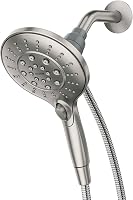
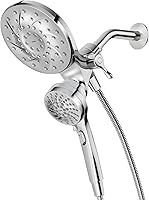
The Delta In2ition 6-setting is the best pick for most bathrooms, because it packs both heads into one unit with a single-unit 2-in-1 design. It docks or runs the handheld separately, and the two can spray at once.
Delta rates it at 1.75 GPM and backs it with a limited lifetime warranty.
Choose the 3-way combo if you want a separate rain head and a slide bar. It gives you the tallest adjustability and the widest setting count.
Pick the HydroRain if you want the two-in-one design with a pivoting raincan and a simpler 5-setting face.
Our score weighs specs, features and buyer intent against what you're shopping for. For more options, compare the rain shower head with handheld picks or read the shower head with handheld buyer's guide.
How do you handle low pressure when both heads run?
Accept a lighter shared spray, or run one head at a time. A dual head splits one supply between two outlets, so each head gets less water in the shared position.
That's normal plumbing, not a fault.
Switch to separate mode for the shampoo rinse, then back to shared for comfort. A 1.75 GPM head keeps total use steady either way.
If the pressure feels weak even on one head, clear the nozzle film and the filter washer first. A clogged screen or scaled face costs more flow than the split does.
Low-flow fixtures elsewhere in the home also pull down pressure at the shower.
A drill-free slide bar like the one on the 3-way combo changes height, not pressure. Move the handheld closer to what you're rinsing rather than expecting the head to boost the stream.
What are the most common mistakes when using two shower heads?
The usual slip is leaving the diverter in the wrong position and assuming the head is broken. If the handheld sprays nothing, check the mode before checking the plumbing.
Other easy fixes: undock the handheld before switching settings, since the dial can be stiff when the head is cradled. Unkink the hose when the flow fades only in hand mode.
And dry the nozzles now and then so film doesn't build up.
Don't force a stuck diverter lever. Run warm water through it and try again gently.
A lever that still won't move needs a replacement part rather than more force.
Finally, don't judge a shared spray by its first second. Water takes a moment to even out when you switch modes.
Give it a few seconds before you change the setting again.
What's the simple routine for using dual shower heads?
Here's how to use dual shower heads without overthinking it. Set the diverter to separate mode for your hair wash, switch to both heads for the warm rinse, then lift the handheld for anything the fixed head misses.
Dock the handheld when you're done, and wipe the nozzles.
Pick the Delta In2ition 6-setting if you want one unit with the most settings and a shared-spray option. Pick the 3-way combo when a separate rain head and a slide bar matter more.
Pick the HydroRain for the pivoting raincan and a quicker install.
Keep the hose untwisted, clear the nozzles, and check the filter washer when the spray weakens. For more on matching a head to your bathroom, read the handheld and combo shower head guides before you buy.
Frequently asked questions
Can dual shower heads run at the same time?
Yes, when the diverter is set to the shared position. Delta's In2ition and HydroRain heads both send water to the shower head and the hand shower together.
Check the diverter label or manual for the setting that splits the flow.
Why does the water slow down when both heads run?
A single supply line splits its flow between two outlets, so each head gets less water than it would alone. The total stays near the rated flow rate, such as 1.75 GPM for the Delta heads.
Expect a lighter spray on each head in the shared mode.
Should the handheld shower head stay docked when not in use?
Yes, dock it in its holder so the hose doesn't hang loose or kink. A slide bar lets you set the height before you dock it.
Lift the hand shower out only when you want to rinse a child, a pet, or a hard-to-reach spot.
Do I need a new valve to add a second shower head?
No, not for the 2-in-1 designs here. They fit a standard shower arm and split the flow at the head with their own diverter.
A separate fixed head on its own arm may need plumbing changes, which is a job for a plumber.
How do you keep two shower heads from clogging?
Wipe the nozzles with a finger after each shower to break up mineral film. Delta's Touch-Clean holes are made for this.
A monthly rinse with plain water and a soft cloth keeps both heads spraying evenly.