Shower Valve vs Diverter: What Each Part Does (October 2026)
The shower valve controls water temperature and flow; the diverter sends water to a chosen outlet. They can sit behind the same handle or trim, but they do different jobs.
On this page (7 sections)
- Shower valve vs diverter: what does each part do?
- How can you tell which part you have?
- What happens in a tub and shower setup?
- Do you need to replace the valve or just the diverter?
- Can you replace trim without replacing the valve?
- What should you check before choosing a replacement?
- Which should you choose, a valve or a diverter?
The shower valve controls water temperature and flow; the diverter sends water to a chosen outlet. They can sit behind the same handle or trim, but each part has a different job.
That distinction matters when a shower drips, a handle feels wrong, or you're planning a new tub and shower setup. Replacing a trim kit or shower head won't solve every valve or diverter problem.
Shower valve vs diverter: what does each part do?
The valve mixes hot and cold water, while the diverter routes water between outlets. Some controls combine these functions in one assembly, so the handle count alone may not tell you what's behind the wall.
The valve is usually the part connected to the hot and cold supply lines. It sets the water temperature and controls how much water reaches the shower system.
A diverter changes where that water goes. Depending on the setup, it can switch flow between a tub spout and shower head, between shower outlets, or among several outlets in a larger system.
What does the shower valve control?
The valve controls the incoming water mix and the flow delivered to the shower. A pressure-balance design responds to pressure changes in the hot and cold lines to help prevent sudden temperature swings.
A thermostatic valve uses a different method of temperature control. If you're choosing between these designs, our guide to pressure-balance vs. thermostatic valves explains what each is meant to do.
The Moen M-Pact Posi-Temp valve is a pressure-balancing option made for Moen Posi-Temp trim kits. Its 1/2-inch IPS connections and brass body may fit a compatible replacement project. {{product B000YLMB6Q | A pressure-balancing rough-in valve for a project using compatible Moen Posi-Temp trim.}}
What does the diverter control?
A diverter changes the route water takes after it reaches the fixture. It doesn't set the hot-to-cold mix, though the diverter and valve may be controlled by parts that look like one handle.
On a tub and shower, lifting or turning a tub-spout control often sends water up to the shower head. Other systems have a separate diverter handle on the wall or a selector built into the shower controls.
A shower with a fixed head and handheld may also use a selector to choose one outlet or both. The Delta In2ition, for example, combines a fixed head and detachable hand shower, with options to use them separately or at the same time. {{product B0DT22PSDT | A two-in-one shower head for choosing between a fixed spray, handheld spray or both.}}
How can you tell which part you have?
Look at what changes when you move each control: temperature and flow point to the valve, while outlet selection points to a diverter. This can help you describe the issue, but it doesn't identify the exact valve model inside the wall.
Turn the control slowly and note what happens. If it changes the mix from cooler to warmer water, it is operating the valve function; if it sends water from the tub spout to the shower head, it is operating a diverter function.
Some single-handle fixtures combine both jobs. Other setups have a main valve handle and a separate button, knob or tub-spout control for switching outlets.
If the shower has one outlet, you may not see a separate diverter at all. For a tub and shower, a diverter is usually needed somewhere in the system to send water to the shower head.
Does one handle mean one part?
No. A single visible handle can operate a valve assembly that controls more than one function.
The trim is the visible control; the valve body and diverter parts may be behind the wall or inside another fixture.
A handle that turns to adjust temperature and pulls to start the water can control the valve. A separate rotation or button may switch outlets, depending on the model.
Don't order a valve based only on the shape of the handle or escutcheon. Use the brand, model number and installation information to identify the rough-in valve before shopping.
Our guide to choosing a shower valve walks through the details that help narrow down a replacement. If you have access to the original paperwork, check it alongside the trim markings.
What happens in a tub and shower setup?
The valve sets the water mix, then a diverter sends flow to the tub spout or shower head. In many common setups, the tub spout itself contains the diverter mechanism.
When the diverter is off, water flows from the tub spout. Moving its pull-up knob or other control blocks that path and sends water through the riser to the shower head.
A separate diverter can make it easier to switch among several outlets. The exact arrangement varies, so don't assume every shower with multiple heads uses the same control design.
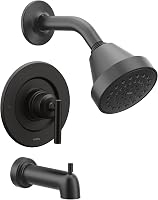
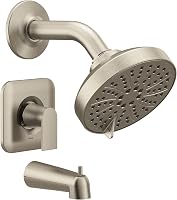
The Delta Modern 14 Series set includes a pressure-balanced cartridge, shower head and tub spout, but its Delta MultiChoice rough-in valve is sold separately. Check the valve and trim compatibility before treating it as a complete valve replacement. {{product B09LZ8S2PF | A tub and shower trim set with a pressure-balanced cartridge; its rough-in valve must be bought separately.}}
Do you need to replace the valve or just the diverter?
Replace or repair the part that matches the symptom, after identifying the system. A temperature-control problem and a failure to switch outlets can come from different components.
A shower that won't get warm or suddenly changes temperature may involve the valve, cartridge, water supply or another issue. A tub that keeps running while the shower is on may point to a worn tub-spout diverter, but other causes are possible.
A diverter that won't switch outlets may be stuck, worn or affected by buildup. Replacing the visible trim alone won't fix a failed internal part if the new trim doesn't match the valve behind the wall.
If the problem involves a leak inside the wall, shut off the appropriate water supply and get help from a qualified plumber. Repairs that expose plumbing or require changing the rough-in valve can involve opening the wall and reconnecting water lines.
Can you replace trim without replacing the valve?
Yes, when the new trim is made for the valve already installed. Trim kits aren't universal, even when the handles and cover plates look similar.
Confirm the valve brand and model before buying replacement trim. A matching trim kit can refresh the visible parts, while an incompatible kit may not fit or operate the existing valve correctly.
The Delta Modern set is a trim kit with a pressure-balanced cartridge, but the recommended Delta MultiChoice rough-in valve is sold separately. That distinction is useful when comparing a trim-only set with a package that includes a valve.
Read our guide on whether shower trim kits are universal before ordering. If you're keeping the valve, check the trim maker's compatibility details and compare them with the valve model you have.
For the steps involved in a trim-only refresh, see how to replace a shower trim kit without a new valve. If the rough-in valve also needs replacement, plan for a more involved plumbing job.
What should you check before choosing a replacement?
Identify the valve brand and model, count the outlets, and decide which controls you need. These checks help you avoid buying trim that fits the style but not the plumbing.
- Find the valve make and model. Look for markings on the trim, paperwork from the installation, or service records. If you can't identify it, a plumber may be able to help.
- Count the outlets. Note whether water goes to a tub spout, one shower head, a handheld or several outlets.
- Check how the controls work. Decide whether you want temperature and flow on one control, a separate outlet selector, or both.
- Confirm what the package includes. A trim set may include the handle and cartridge but require a separate rough-in valve.
- Check connection and installation needs. Make sure the valve type and plumbing connections suit the project.
If you're planning a full shower system, our guide to planning a shower system installation covers the parts and layout to think through before work begins.
Which should you choose, a valve or a diverter?
Choose a valve when the project needs to control temperature or flow; choose a diverter when it needs to route water among outlets. A full replacement may need both, depending on the current setup.
If you're replacing trim, start by identifying the valve already in the wall and finding a compatible trim kit. If you're adding a handheld or another outlet, check whether your existing system has a suitable diverter and enough outlets for the layout.
The key decision in a shower valve vs diverter project is the job you need done: control the water mix, or change its destination. For a trim refresh, begin with our guide to replacing shower trim without changing the valve.
Related guides
- Pressure-balance vs. thermostatic valves
- What shower valve do I need?
- Are shower trim kits universal?
- How to replace a shower trim kit without a new valve
Frequently asked questions
What is the difference between a shower valve and a diverter?
A shower valve mixes hot and cold water and controls the supply to the shower. A diverter redirects that water to an outlet such as a tub spout, shower head or handheld.
Some systems use separate controls, while others combine functions in one trim assembly.
Does a shower valve control water temperature?
Yes. The valve mixes hot and cold water, and its design affects how it responds when pressure changes elsewhere in the home.
Pressure-balance and thermostatic valves handle temperature control in different ways, so identify the installed valve before choosing replacement trim.
Can a shower valve work without a diverter?
Yes, a shower with one outlet may need a valve without a separate diverter. A tub and shower setup needs a way to direct water between the tub spout and shower head, often through a diverter built into the tub spout or control.
Do I need to replace the valve to change shower trim?
Not always. Trim can be replaced without opening the wall when the new trim matches the existing valve brand and model.
Check compatibility first; trim styles and cartridges are not universal, and a mismatch may require replacing the rough-in valve.
Is a shower head with a handheld a diverter?
A shower head with a handheld offers more than one spray outlet, and a selector can route water between them or allow both at once. That selector serves a diverter function for those outlets, but it does not replace the main valve that controls temperature.